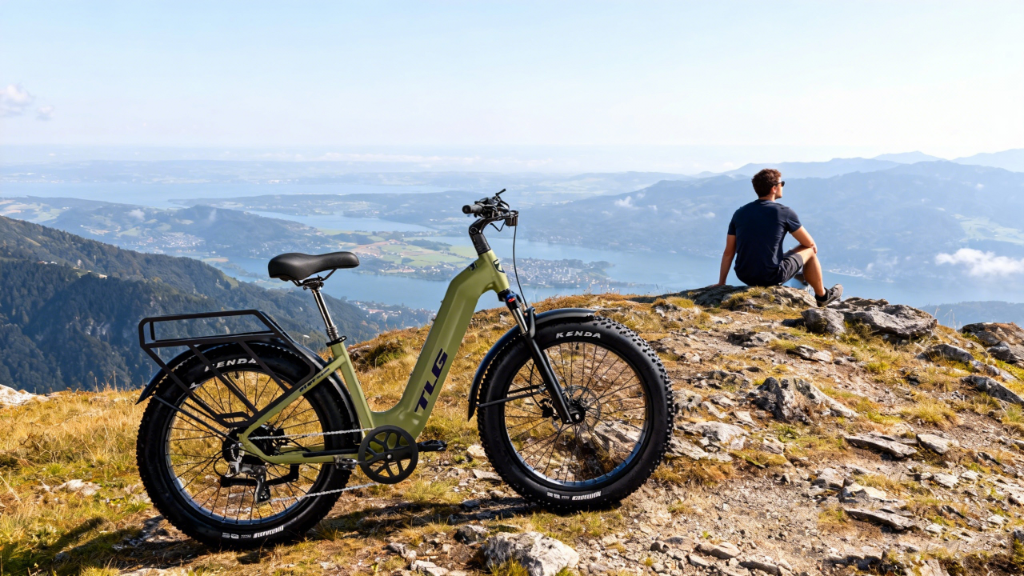
Knowing your way around a tire is useful for any cyclist, but it’s especially important for ebike riders.
Not only do people tend to cover more miles on an electric bike, leading to more chances for wear and tear, but the added weight of an ebike makes proper tire pressure and tread choice even more significant.
But don't let that deflate you. A little know-how can go a long way. Here’s what you need to know to choose, maintain, and fix your tires, so you can keep rolling.

Choosing the Right Ebike Tires for Your Ride.
The tires that come with your ebike model were chosen to perform well in a variety of conditions, but some are designed for specific riding styles.
That’s why Rad's off-road ebikes have fat tires for extra stability and traction on rough terrain, while our commuter models use slimmer tires for speed and efficiency on pavement.
Depending on your riding style, you might eventually want to swap them out for a better fit. Here’s what to consider:
Off-Road Riding: If your route includes dirt, gravel, or trails, knobby tires are the way to go. They dig into soft surfaces for better grip, giving you the traction you'll need to tackle the conditions.
City Riding: For pavement, slick tires offer the smoothest ride. Their wider contact patch maximizes grip on dry roads, improving speed and efficiency. Just keep in mind that in wet or cold conditions, they’ll have less traction—so adjust your speed and braking distance accordingly.
Tire Size & Compatibility
Before swapping your tires, make sure they’re compatible with your wheels and your ebike. Check the sidewall of your current tires for the correct diameter and width, and refer to your Owner’s Manual. Using tires that are too large or too small can affect performance and compromise safety (and nobody wants that!)
Finding the Right Tire Pressure for Your Ebike.
Too much air makes for a stiff, bumpy ride. Too little means pinch flats and poor handling. Luckily, it's easy to get it just right.
The simplest way is to check the tire itself. The recommended pressure is always printed on the sidewall, either as a max PSI (e.g., MAX 60 PSI) or a range (e.g., 80-100 PSI).
(Wondering what PSI means? It’s just a fancy way of saying pounds per square inch. More PSI = firmer, less PSI = softer.)
If your tire lists both a range and a maximum, it might seem like there’s a lot of room for guesswork. While you should never go over or under the recommended PSI, you’ll want to experiment within the range to find what feels best for you. Here’s what to keep in mind:
Weight: If you’re a heavier rider, or are someone who carries a lot of kids or cargo on the back of your ebike, you’re going to need more air.
Terrain: If you’re riding off-road, a lower PSI will give you better grip. If you usually ride on pavement, you’ll want a higher PSI for more efficiency.
Weather: If you’re riding on wet or slippery surfaces, you can get better traction when you stick to the lower end of your PSI range.
Comments
Leave a Comment
Checking login status...
You must be logged in to leave a comment.
No comments yet. Be the first to comment!