Helmet use is one of the most common questions among new e-bike riders. Unlike traditional bicycles, e-bikes can reach higher speeds and are often used in more varied environments, from city streets to longer commutes.
The answer is not always the same everywhere. Laws vary depending on location, and personal preference also plays a role. However, understanding both legal requirements and practical safety considerations helps you make a more confident decision.
Local Laws Can Vary Significantly
Helmet regulations for e-bikes are not universal.
In the United States, there is no single federal law that applies nationwide. Instead, rules are defined at the state or city level. For example:
- California: Helmets are required for riders under 16 when using Class 3 e-bikes
- New York: Helmets are required for all e-bike riders
- Other states: Regulations may vary depending on e-bike class or rider age
- Because of these differences, checking local regulations is always recommended. Even when helmets are not legally required, they are widely encouraged as a basic safety measure.
Higher Speeds Change the Risk Profile
E-bikes are capable of maintaining higher speeds than standard bicycles.
For example, many Class 3 e-bikes can assist up to 28 mph (45 km/h). At these speeds, reaction time, stopping distance, and impact forces all increase. This does not mean riding is unsafe, but it does mean that protective gear becomes more relevant.
A helmet adds a layer of protection that becomes more important as speed increases, especially in urban traffic or mixed-use environments.
Choosing the Right Helmet Matters
Not all helmets are the same, and choosing the right type improves both comfort and effectiveness.
For e-bike riders, it is recommended to look for:
- CPSC or ASTM certification — ensures the helmet meets recognized safety standards
- MIPS (Multi-directional Impact Protection System) — helps reduce rotational forces during impact
- Adjustable fit system — improves stability and comfort for longer rides
- Optional visor — useful for sun protection or light rain during commuting
- For everyday riding, a standard commuter-style helmet is usually sufficient. Riders using higher speeds or off-road environments may consider more protective designs.
Fit Is Just as Important as Certification
A high-quality helmet only works properly if it fits correctly.
The helmet should sit level on your head, not tilted forward or backward. The straps should form a secure but comfortable fit under the chin, and the helmet should not move significantly when adjusted.
A poor fit reduces effectiveness, even if the helmet itself meets safety standards.
Make It Part of Your Routine
The most effective safety habits are the ones that become automatic.
Wearing a helmet consistently, even for short trips, reduces the need to make decisions each time you ride. Over time, it becomes part of the normal preparation process, just like checking your battery or lights.
Consistency matters more than occasional use.
Designed for Real-World Riding
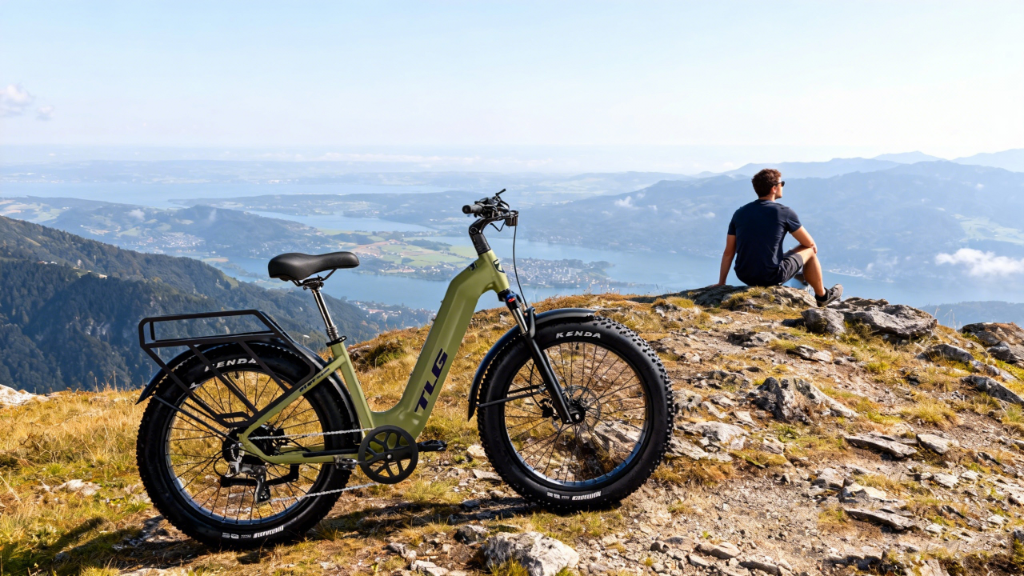
At TLG, e-bikes like the AMPTRAIL are designed for practical, everyday use, including higher-speed commuting scenarios. With assist speeds reaching up to 28 mph on certain models, pairing your ride with a certified helmet is strongly recommended for added confidence and safety.
FAQ
Do I always need to wear a helmet?
It depends on local laws, but wearing one is strongly recommended, especially at higher speeds.
Are helmets required for all e-bikes?
Not everywhere. For example, some regions require helmets for Class 3 e-bikes or younger riders.
What type of helmet should I choose?
A certified helmet with a proper fit is the most important factor. For e-bike riders, models with MIPS technology are often recommended.
Comments
Leave a Comment
Checking login status...
You must be logged in to leave a comment.
No comments yet. Be the first to comment!