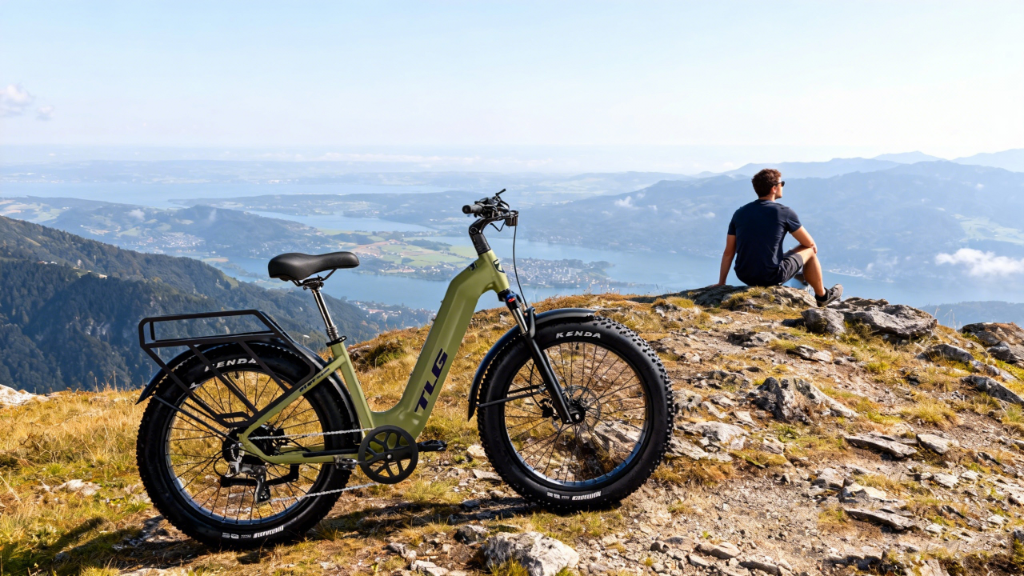
Choosing an e-bike often starts with one question: Should you go with 500W or 750W? At first glance, the answer seems obvious. A higher wattage motor sounds more powerful, more capable, and therefore better. But in real-world riding, the difference isn’t as simple as bigger numbers. For most riders, what matters isn’t peak power—it’s how that power fits into everyday use. Understanding this difference can help you choose a bike that actually matches your needs instead of just chasing specs.
Why Wattage Doesn’t Tell the Full Story
Motor wattage is one of the most visible numbers in e-bike specifications. It’s often used as a quick way to compare performance, but it doesn’t always reflect how a bike feels on the road. A 750W motor can deliver more peak output than a 500W motor.
However, that extra power only becomes noticeable in specific situations—such as steep climbs, heavier loads, or off-road riding. For everyday commuting, flat terrain, and moderate distances, both 500W and 750W motors can provide more than enough assistance. In fact, many riders find that a well-tuned 500W system feels smoother and more efficient than a poorly tuned higher-power motor. This is why wattage alone shouldn’t be the deciding factor.
Torque Matters More Than You Think
If wattage tells you how much power a motor can produce, torque tells you how that power is delivered. Measured in Newton-meters (Nm), torque determines how quickly the bike accelerates and how well it handles inclines.
For example:
A 500W motor with 60–70Nm torque can handle most urban environments comfortably
A 750W motor with **80–90Nm torque** provides stronger support for steep hills and heavier loads
This is especially important for riders who frequently encounter hills or carry extra weight. Instead of focusing only on wattage, understanding torque gives a clearer picture of how the bike will perform in real conditions.
Real-World Riding Scenarios
The best way to choose between 500W and 750W is to consider how and where you ride. For urban commuting, shorter trips, and relatively flat terrain, a 500W motor is often the most practical choice. It offers sufficient power while maintaining efficiency and longer battery range. For mixed terrain, longer rides, or areas with frequent hills, a 750W motor can provide additional support. Riders who carry cargo or prefer a more responsive ride may also benefit from higher power output. In off-road or trail environments, the extra torque from a 750W system can make a noticeable difference, especially on loose or uneven surfaces. The key is to match the motor to your actual riding conditions—not ideal scenarios.
Legal Considerations You Shouldn’t Ignore
Motor power is not just a performance decision—it can also affect where and how you are allowed to ride. In many regions, including parts of Europe and Japan, e-bike regulations limit motor power to 250W for standard electric bicycles. In the United States, most e-bike classifications focus more on speed limits than wattage, but regulations can still vary by state. 750W motors are generally accepted in many U.S. markets, but they may fall into different regulatory categories in stricter regions. This makes it important to consider local laws when choosing an e-bike, especially if you plan to travel or use it across different areas.
Battery Efficiency and Range
Higher power does not always mean better efficiency. A 750W motor can consume more energy, especially when used at higher assist levels. This can reduce overall range compared to a 500W system under similar conditions. Most modern e-bikes offer a range of 40 to 80 miles per charge, depending on terrain, rider input, and assist settings. For riders focused on daily commuting or longer distances, a balanced system that prioritizes efficiency can often be more practical than one designed for maximum power.
Matching the Bike to Your Lifestyle
The best e-bike is not the one with the highest specs—it’s the one that fits how you ride. If your routine involves city streets, short to medium distances, and predictable routes, a 500W system is likely more than enough. If your rides include hills, cargo, or varied terrain, a 750W motor may provide additional flexibility and confidence. At TLG, our e-bike lineup is designed to support real-world riding scenarios. Whether you’re commuting through the city or exploring beyond paved roads, the focus is always on balance—power, efficiency, and comfort working together.
Frequently Asked Questions
1. Is 750W always better than 500W?
Not necessarily. While 750W provides more power, it’s only beneficial in specific conditions such as steep terrain or heavy loads.
2. Does higher wattage mean faster speed?
Not always. In many regions, e-bike speed is limited by regulation rather than motor power.
3. Which is better for commuting?
For most urban commuting scenarios, a 500W motor is sufficient and often more efficient.
4.Does a 750W motor reduce battery life?
It can, especially when used at higher power levels. Riding style and terrain also play a significant role.
5. Is 500W enough for hills?
Yes, for moderate hills. For steep or frequent inclines, a higher torque motor may be more suitable.
6. Making the Right Choice
Choosing between 500W and 750W is less about choosing the “better” motor and more about choosing the right tool for your environment. A balanced system that matches your daily riding habits will always outperform a higher-powered bike that doesn’t fit your needs. If you’re unsure, start with how you actually ride—not how you imagine you might ride. Because in the end, the best e-bike is the one you use the most.
Explore the Right Fit with TLG
Whether you prefer efficiency for daily commuting or extra power for more demanding rides, TLG e-bikes are designed to deliver reliable performance in real-world conditions.
Comments
Leave a Comment
Checking login status...
You must be logged in to leave a comment.
No comments yet. Be the first to comment!